 EN
EN

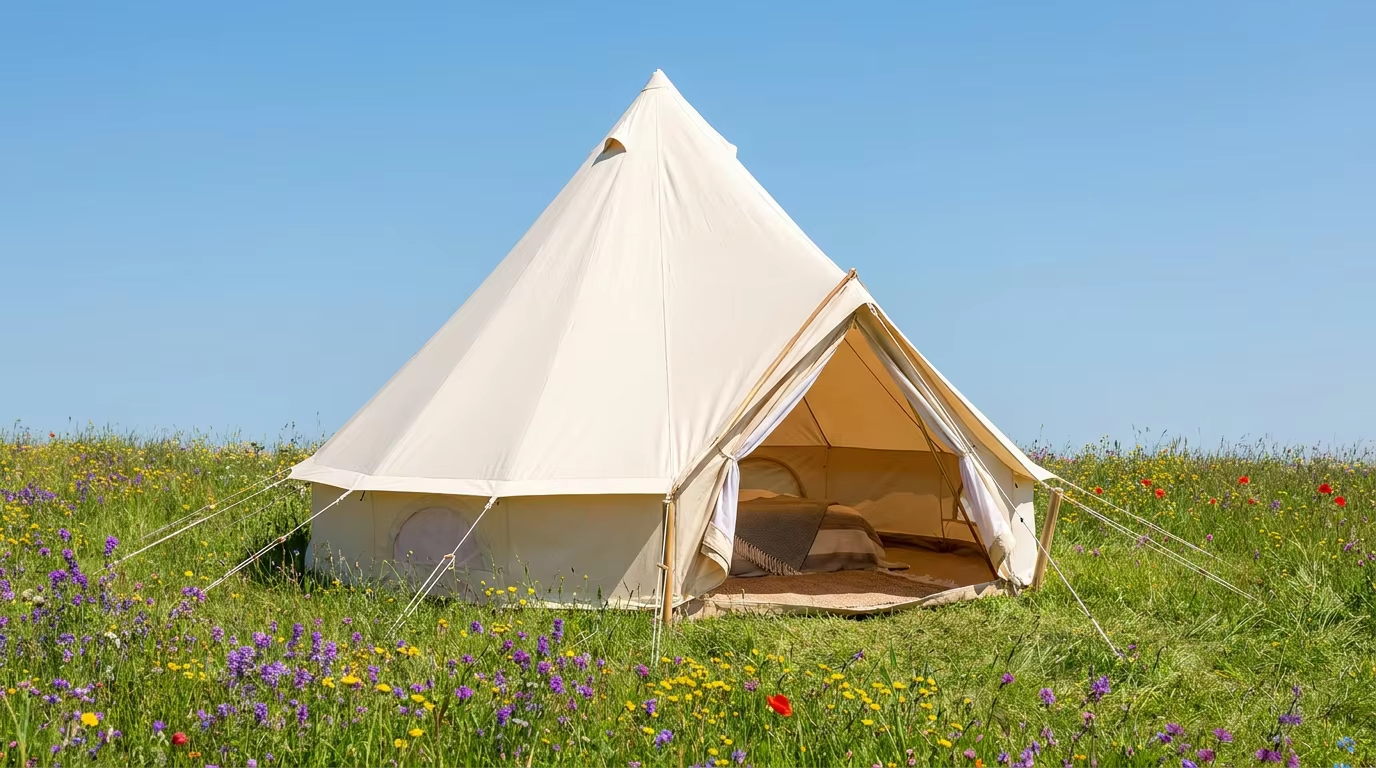
The Material That Separates a Campground From a Retreat
Walk through a high-end glamping site and the tents share one common feature: they are made of canvas. Not polyester. Not nylon. Canvas. The material choice is not aesthetic nostalgia — it is physics, thermal dynamics, and a century of proven performance that synthetic fabrics have not fully replicated.
A canvas tent feels different because it behaves differently. Cotton canvas breathes, regulating internal humidity in a way that coated synthetics cannot. It absorbs sound rather than amplifying it — rain on a canvas roof is a muffled patter, not the sharp drumming heard inside a polyester tent. For glamping operators charging $300 a night, these material properties translate directly into guest satisfaction and repeat bookings.
How Canvas Fabric Works Differently From Synthetics
Breathability Through Natural Fiber Structure
Cotton fibers are hollow tubes that wick moisture away from their surface. When warm, humid air inside a canvas tent contacts the cooler fabric walls, moisture passes through the cotton fibers and evaporates on the exterior surface. This is fundamentally different from a PU-coated polyester tent, where moisture hits an impermeable barrier, condenses, and drips back down. The result inside a canvas tent on a cool night: dry walls and comfortable air. Inside a polyester tent under the same conditions: beading condensation by midnight.

The trade-off is that canvas requires a period of "weathering" — the first time a new canvas tent gets wet, the cotton fibers swell and close the microscopic gaps between weave threads. After this initial wet-dry cycle, the fabric becomes naturally water-resistant without a chemical coating. Polyester achieves waterproofing instantly through its PU layer but never gains breathability.
Thermal Mass That Stabilizes Interior Temperature
A canvas tent absorbs heat slowly during the day and releases it slowly at night. The material's thermal mass buffers against the rapid temperature swings that make polyester tents uncomfortably hot by 8 AM and chilly by 10 PM. On a 75°F day, a canvas tent interior stays at roughly ambient temperature through midday while a polyester tent interior climbs 10-15°F above ambient within an hour of direct sun exposure. At night, the stored heat in the canvas walls radiates back into the tent, delaying the temperature drop that arrives immediately inside synthetic shelters.
Acoustic Dampening
Canvas absorbs sound waves across a broad frequency range. Rain, wind, and external conversation are dampened rather than transmitted. For glamping sites clustered within earshot of neighboring tents, a canvas tent provides a level of acoustic privacy that synthetic tents, with their drum-tight fabric panels, cannot offer. The difference is subjective but measurable: decibel reduction across canvas versus polyester at identical fabric weights averages 4-6 dB, roughly the difference between normal conversation and a lowered voice.
Canvas Tent Types for Glamping Applications
Bell Tents: The Glamping Standard
The bell-shaped canvas tent with a single central pole and circular footprint has become the default glamping structure. Its geometry creates standing headroom across most of the floor area — a 5-meter bell tent provides full standing height across approximately 80% of its interior, compared to roughly 30% for a dome tent of equivalent floor area. The single-pole design also allows rapid setup by two people in under 20 minutes, a practical consideration for operators setting up seasonal sites with a dozen or more tents.
Safari Tents: Extended-Stay Architecture
Safari-style canvas tent designs incorporate vertical side walls, rectangular footprints, and internal partition walls that create separate sleeping, living, and washing areas. These structures function as temporary buildings rather than tents — some models include built-in flooring, electrical conduit channels, and stove-jack openings for wood-burning heaters. The construction time is measured in hours rather than minutes, making safari tents suitable for semi-permanent installations rather than rotating seasonal setups.
A Real Glamping Site Development Case
A hospitality operator in the Scottish Highlands developing a 15-unit glamping site on an exposed hillside initially specified polyester bell tents based on lower per-unit cost. After one season of operation, guest feedback identified two recurring complaints: tents became uncomfortably hot by 9 AM during the brief but intense Scottish summer mornings, and condensation dampened bedding on cool, humid nights typical of the Highland climate. The operator replaced the polyester units with 320gsm cotton canvas tent bell tents before the second season. Post-season guest satisfaction scores on "sleeping comfort" rose from an average of 3.6 to 4.7 out of 5. The operator calculated that the higher canvas tent cost — roughly 2.5 times the polyester equivalent — was recovered within one season through reduced guest compensation claims and a 15% increase in average nightly rate that the canvas upgrade justified.
Canvas Tent Procurement Checklist
Fabric Weight and Its Effect on Durability
Canvas weight is measured in grams per square meter (gsm). A 220gsm canvas tent is lightweight and suitable for fair-weather seasonal use. A 320gsm canvas tent withstands multi-season commercial use with wind exposure. For permanent or semi-permanent glamping installations, 380-420gsm canvas provides the tear resistance and thermal mass required for year-round operation. Heavier canvas costs more and takes longer to dry after wet weather, but the durability increase is roughly proportional to the weight increase.
Treatment Type: Natural vs. Synthetic Waterproofing
Traditional canvas tent waterproofing uses a paraffin-based treatment that requires reapplication every 1-2 seasons. Modern treatments use silicone or fluoropolymer coatings that last 3-5 years but reduce breathability by creating a partial moisture barrier. For glamping operations prioritizing the natural canvas experience, paraffin-treated canvas with a documented re-treatment schedule offers the best balance of breathability and weather protection.
Mold Resistance in Humid Climates
Canvas stored damp develops mold within 48-72 hours in warm conditions. A canvas tent specified for humid or coastal environments should include an anti-fungal treatment applied at the fabric-mill stage, not as an aftermarket spray. Ask for the treatment specification and the expected effective lifespan under the site's specific humidity conditions.
Frequently Asked Questions
Why is canvas better than polyester for glamping tents?
A canvas tent breathes — cotton fibers allow moisture vapor to pass through while blocking liquid water after initial weathering. This prevents the condensation buildup common in sealed polyester tents. Canvas also provides superior thermal mass and acoustic dampening, both critical for guest comfort in luxury camping operations.
How long does a canvas tent last?
A commercial-grade 320gsm canvas tent with proper maintenance lasts 5-8 years of seasonal use. Paraffin-treated canvas requires re-treatment every 1-2 seasons. Silicone-treated canvas extends re-treatment intervals to 3-5 years. UV exposure is the primary degradation factor — shaded or forested sites extend tent lifespan significantly.
Does a canvas tent require special maintenance?
A canvas tent must be completely dry before storage to prevent mold. Paraffin-treated canvas needs periodic re-waterproofing. Zippers require silicone lubrication to prevent corrosion. Unlike polyester tents that can be packed damp and dried later, canvas demands immediate drying after wet weather use.
How heavy is a canvas tent compared to a polyester tent?
A 5-meter canvas bell tent weighing 45-55 pounds compares to 18-25 pounds for an equivalent-sized polyester canvas tent alternative. The weight difference reflects the material density that provides canvas's thermal and acoustic benefits.
Can a canvas tent be used in winter?
Heavyweight 380gsm+ canvas tent models with stove-jack openings function as four-season shelters when paired with a wood-burning stove. The canvas thermal mass retains heat from the stove longer than synthetic fabrics, making the interior habitable for several hours after the fire dies down.
What causes canvas tents to leak, and how is it prevented?
A new canvas tent leaks through the weave gaps until the first wetting causes cotton fibers to swell and seal — a process called weathering. Leaks in seasoned canvas result from contact with interior walls during rain. Avoid pressing sleeping bags or gear against canvas walls in wet weather, as surface tension draws water through at contact points.