 EN
EN

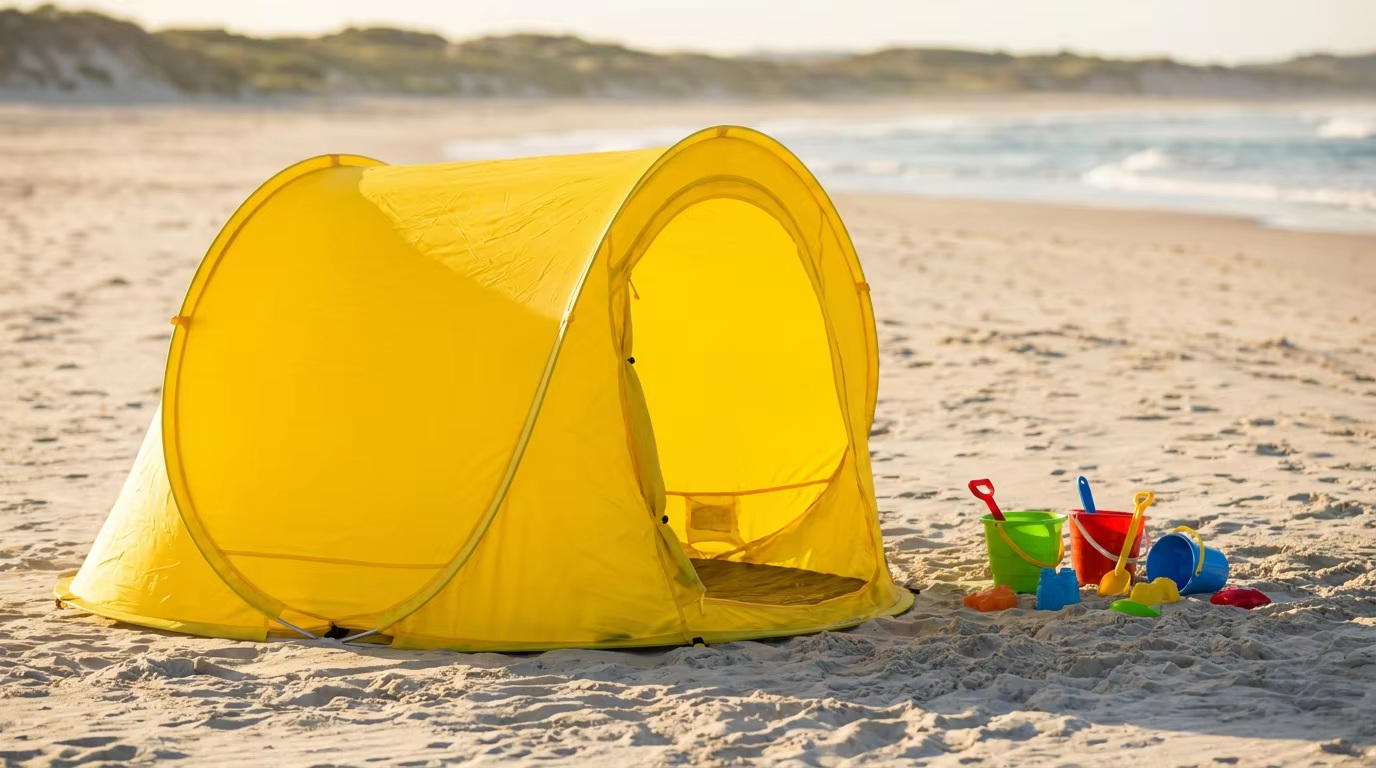
When the Wrong Tent Ruins a Perfect Beach Day
Picture a family arriving at the shore at 10 AM. Two kids, a cooler, beach chairs, and a tent that looked spacious in the online listing. By 11 AM, half the family is baking in the sun because the tent footprint only covers two people lying perfectly still. The afternoon becomes a rotation of who gets shade and who gets burned.
A pop up tent solves the setup problem. The wrong size creates a different one entirely. Beach tents are not camping tents — the requirements are narrower, and the margin for error is smaller because there is no tree line or evening cool-down to compensate.
Matching Pop-Up Tent Dimensions to Family Size
Two-Person Beach Setup: Compact and Nimble
A 2-person pop up tent with a 6.5'×4.5' footprint suits couples or a parent with one small child. At this size, the tent weighs under 5 pounds and fits inside a standard beach tote. The advantage is portability — carry it a quarter mile down the sand without a second trip. The limitation shows up fast: no room for bags, coolers, or a third person lying down.
Four-Person Configuration: The Sweet Spot
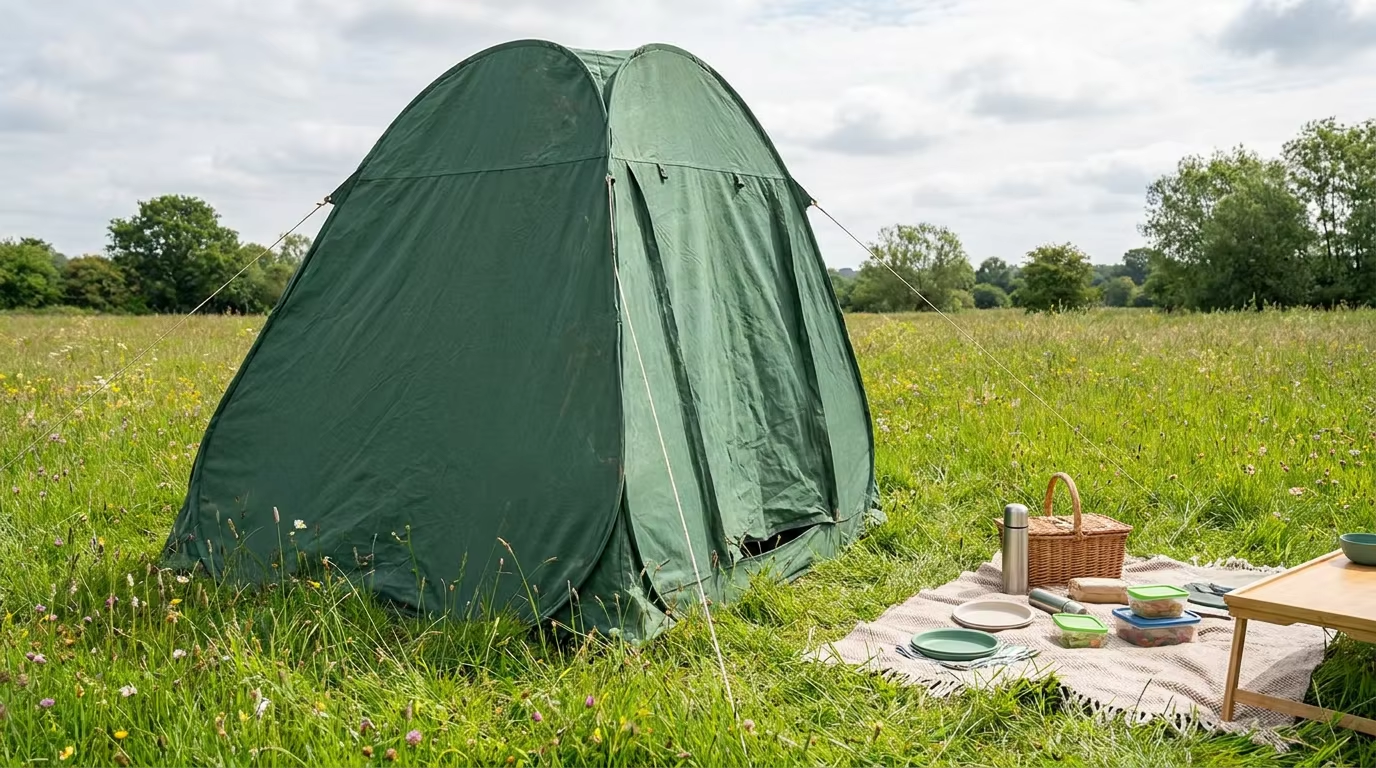
For a family of four — two adults, two children — a pop up tent measuring 8'×6' or larger hits the practical sweet spot. This footprint accommodates two adults seated in beach chairs with a small central area for a cooler and toys. Look for a center height of at least 54 inches so adults can sit upright without brushing the ceiling. At this size, the tent typically weighs 6-8 pounds and packs down to a 30-inch disc, still manageable as a single carry.
Six-Person Beach Base Camp: When Space Matters Most
Extended family outings or all-day beach gatherings demand a different calculation. A pop up tent in the 10'×8' to 12'×9' range creates a genuine base camp. These larger models often include removable side panels — useful for blocking wind from one direction while leaving the ocean view open. The trade-off is weight, typically 10-14 pounds, and a packed diameter approaching 36 inches. Two-person carry becomes practical.
Why Beach Tents Demand Different Engineering Than Camping Tents
Sand Anchoring vs. Stake Depth
Grassland campsites allow 8-inch stakes driven into compact soil. Beach sand offers zero grip at that depth. An effective pop up tent for beach use relies on wide-mouth sand anchors — plastic scoops or fabric bags that fill with sand to create 15-20 pound anchor points at each corner. The physics is simple: buried surface area resists wind uplift better than any stake in loose sand. Ground-level wind gusts at the beach regularly hit 15-20 mph, and a poorly anchored 8'×8' tent becomes a kite at 25 mph.
UV Protection as a Non-Negotiable
A standard camping tent's primary job is weather protection. A pop up tent used at the beach has a second, equally critical job: UV blocking. The fabric's UPF rating determines how much ultraviolet radiation passes through. A UPF 50+ rating blocks 98% of UV rays, reducing direct exposure to levels that prevent sunburn during a four-hour beach stay. Silver-coated polyester inner layers reflect additional radiation, keeping interior temperatures 8-12°F cooler than uncoated fabric under direct midday sun.
Salt Spray and Sand Abrasion
Marine environments accelerate material degradation. Zippers exposed to salt spray corrode three times faster than inland zippers. Polyester fabric with a PU coating resists salt crystal embedding better than nylon, which absorbs moisture and stiffens after repeated saltwater exposure. Sand acts as a micro-abrasive — it works into pole joints and fabric weaves. A pop up tent built for regular beach use specifies corrosion-resistant zipper coils (nylon rather than metal) and sealed pole hubs that prevent sand ingress.
A Real Procurement Decision
A beach equipment rental business in Southern California operating across three coastal locations faced high replacement rates on their tent inventory. Salt corrosion on metal hub connectors and zipper failures accounted for 70% of units retired before two seasons. The operator switched to a pop up tent line using fiberglass-reinforced nylon hubs, silicone-coated zipper tracks, and sand-anchor systems with 360-degree swivel joints to handle shifting wind directions. After one full season — approximately 180 rental days — frame failures dropped to near zero, and zipper replacements fell by 60%. The per-unit cost increased by 18%, but the two-season replacement cycle extended to four seasons, yielding a net 35% reduction in annual equipment cost.
Evaluating a Pop-Up Tent Before Purchase
Folded Size vs. Trunk Space
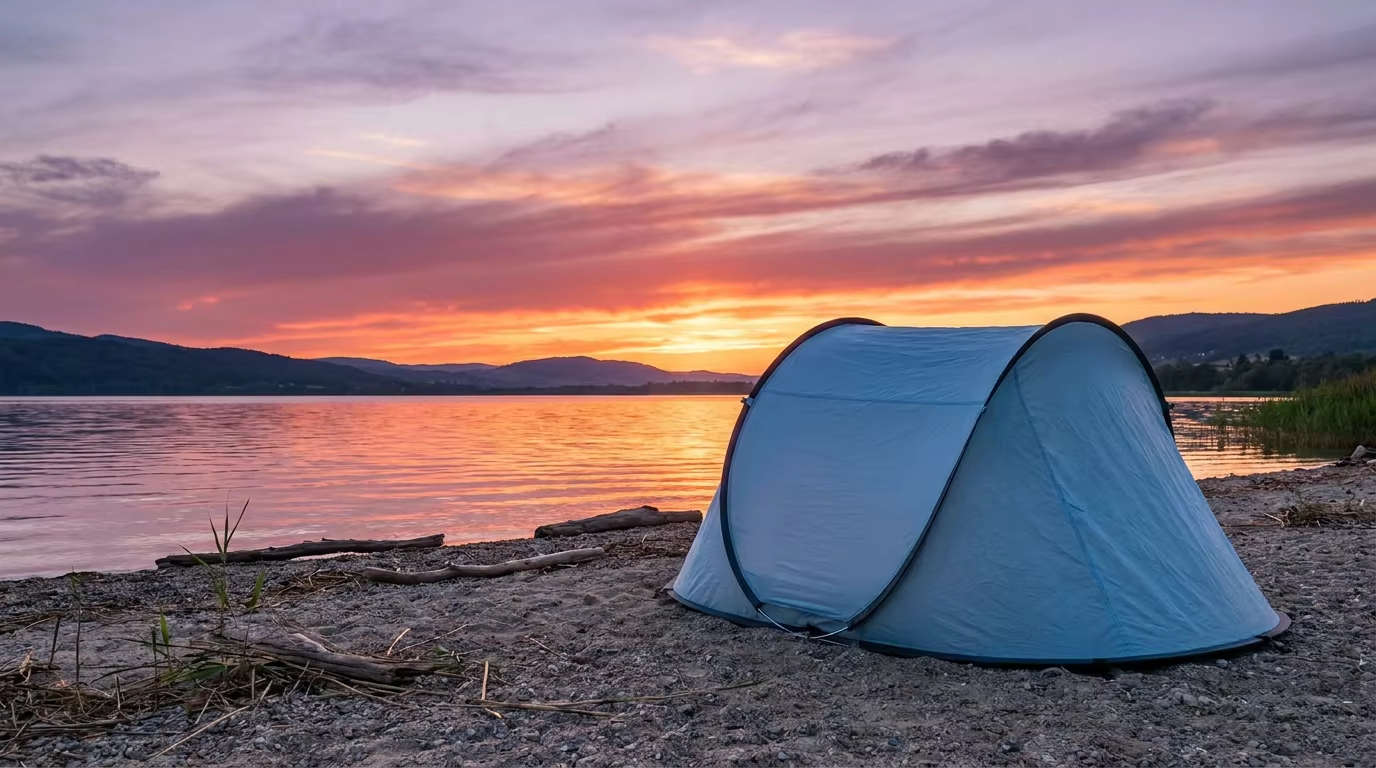
Beach trips already fill a vehicle. Measure the trunk before committing to a pop up tent that folds to a 36-inch disc. Pop-up tents collapse into a flat circular shape — the diameter matters more than the listed "packed size" dimensions. A 28-inch disc stacks easily atop luggage; a 38-inch disc does not.
Frame Material in Saline Conditions
Steel frames rust. Fiberglass frames splinter. Spring steel with a powder coating offers the best compromise of flexibility and corrosion resistance for beach use. Flex the frame poles during inspection — they should bend without creaking and snap back to shape instantly.
Mesh-to-Fabric Ratio
Too much mesh invites wind-driven sand inside. Too little traps heat. An ideal pop up tent for the beach places mesh panels in the upper third of each wall with zippered fabric covers that can close during gusty conditions. This configuration vents hot air upward while keeping blowing sand at floor level outside.
Frequently Asked Questions
What size pop up tent do I need for a family of four at the beach?
An 8'×6' to 9'×7' pop up tent comfortably fits two adults and two children with space for beach chairs and a cooler. Center height should be at least 54 inches for seated adult comfort. Larger families with teenagers should move up to a 10'×8' footprint.
How does a pop up tent stay anchored on sand?
Quality beach pop up tent models use sand pockets or scoop anchors at each corner. Each anchor holds 15-20 pounds of sand when filled and buried, creating enough resistance to withstand 20-25 mph wind gusts. Standard tent stakes are ineffective in loose beach sand.
Can a pop up tent handle strong beach winds?
A properly anchored pop up tent withstands sustained winds up to 20 mph. The key is using all anchor points and orienting the narrowest side toward the prevailing wind direction. In gusts above 25 mph, even well-anchored tents should be collapsed for safety.
How much UV protection does a beach pop up tent provide?
A UPF 50+ rated pop up tent fabric blocks 98% of UV radiation. Many beach-specific models add a silver-coated inner lining that reflects additional radiation, keeping interior temperatures noticeably lower than uncoated tents under the same sun exposure.
How long does it take to set up and take down a pop up tent?
A quality pop up tent deploys in 30 seconds or less — simply remove it from the carry bag and release the folded frame. Take-down requires learning a specific folding motion, which takes 2-3 practice attempts before it becomes a 60-second routine.
Are pop up tents waterproof enough for unexpected beach rain?
Most beach pop up tent models use water-repellent fabric rated for light to moderate rain, not sustained downpours. The open-front design common on beach tents means rain protection is directional rather than full-coverage. For mixed-weather beach destinations, select a model with attachable rain panels on all sides.