 EN
EN

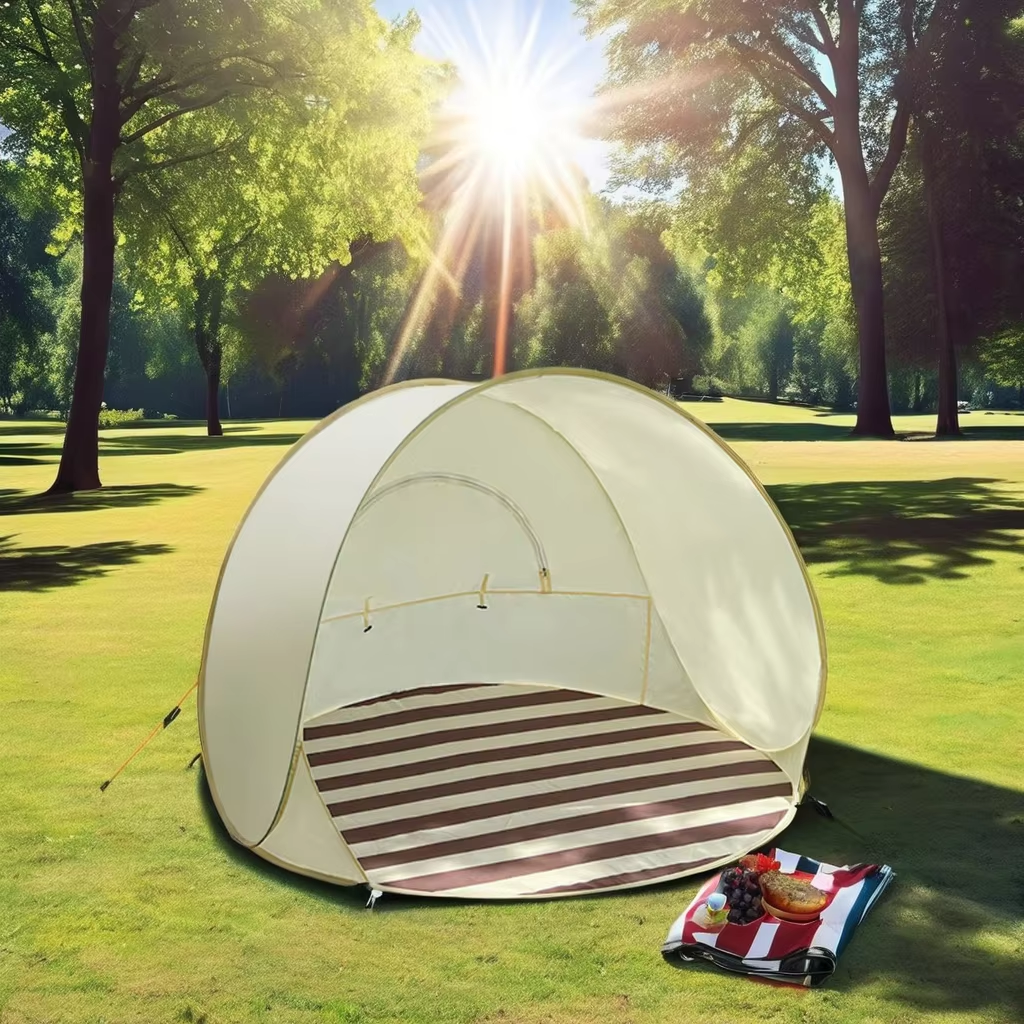
A well-maintained beach tent outperforms a neglected one. Procurement managers who source for resorts, rental fleets, and retail shelves face the same reality: inventory folded wet returns next year as write-off stock. Off-season care is a margin protector. The steps below apply to pop-up shades, steel-frame cabanas, and similar polyester fabric shelters alike.
Why Off-Season Care Protects Your Inventory
The Hidden Cost of Sand and Salt Residue
Leftover sand on a beach tent frame looks harmless, but salt-laden grit works like sandpaper against coated surfaces. Polyester fabric with a PU coating relies on an intact film to reach its rated hydrostatic head of around 2000 mm water resistance. Abrasion from trapped sand thins that layer. Field teams report that a rental unit returned with caked salt shows early delamination along the floor area where rubbing is worst. The same grit scratches the UV-blocking layer and lowers the rated UPF protection over time. A quick freshwater rinse dissolves salt crystals before they score the UV-blocking coating. Buyers should standardize a rinse step at the point of return so residue never reaches the storage shelf.
Mold Risk When Fabric Stays Damp
Mold and mildew need moisture, warmth, and organic residue. A canopy folded damp creates all three inside sealed plastic. Spores feed on faint body oils and sunscreen film, then spread along reinforced seams where stitching holds moisture. The result is staining no scrubbing removes and a musty odor that signals compromised breathability. Most procurement managers who skip the dry-down step reopen a beach tent to find the canopy spotted and the resale value gone. Controlling mold starts with forced-air drying, not chemicals applied after damage.
Rinse, Dry, and Disinfect Before Packing
Removing Sand and Salt Without Damaging Coatings
Start with a low-pressure freshwater rinse, working top down so grit flows away instead of into the weave. Avoid harsh detergents; a mild soap preserves the UV protection layer that meets AS/NZS 4399 and AATCC 183 UPF rating expectations for sun protection. Frame handling should respect ISO 5912 geometry so gentle care protects certified structure. Scrub mesh ventilation panels with a soft brush so sand does not lodge and restrict airflow. Rinse the fiberglass poles and steel wire hubs, then wipe the guy lines and tension hardware dry. Aggressive brushing lowers water resistance tested under ISO 811. Buyers should request a test report referencing ISO 811 for water resistance before approving a bulk order.
Achieving Full Dryness to Block Mold
Full dryness means more than surface dry. Set the shelter up in shade or indoors and let air move through every panel for several hours; trapped humidity inside double walls drives off-season mildew. Buyers should confirm the fabric feels cool and weightless, not clammy, before folding. Weight is a reliable proxy: a damp beach tent canopy is noticeably heavier than a dry one. Only when the structure passes the touch-and-weight test should packing begin.
Folding Technique and Breathable Storage
A Folding Method That Protects Poles and Seams
Collapse the frame along its engineered hinge points rather than forcing a tight roll that stresses the steel frame. When folding a family beach tent, follow the same hinge logic to avoid bending the steel wire. Fold the fabric in broad, loose panels that keep reinforced seams flat instead of creasing them, since a sharp fold can crack the PU coating at the bend. Keep packability in mind: a consistent fold pattern means the unit slides into its carry bag without overstuffing. Most procurement managers find that labeling each folded unit by size reduces re-pack errors during the busy spring restock.
Choosing a Breathable Carry Bag Over Plastic
A breathable cotton or mesh carry bag lets residual moisture escape, while sealed plastic traps it against the fabric. A breathable bag keeps the beach tent aired through winter and prevents stale dampness that breeds odor. Choose a storage sack with ventilation and a loose fit so the polyester fabric is not compressed for months. Wind resistance and setup time both suffer when hardware impressions weaken the cloth. A dedicated breathable bag protects the investment better than the thin polywrap a unit ships in.
Where to Store and How to Inspect Next Season
A Cool, Dry Location Beats the Garage Floor
Heat and humidity are the enemies of stored shelters. A garage floor in summer can exceed safe limits and cook the PU coating, while a damp basement feeds mold from below. The right spot is cool, dark, and dry with steady airflow, ideally on a raised shelf away from concrete. Keep units off the ground and clear of windows where sunlight degrades the UV-blocking layer. Stacking should be light; heavy piles crush the frame and distort the steel wire. Consistent environmental control separates a fleet that opens strong from one that opens with surprises.
A Pre-Season Inspection Checklist
Before the first beach tent booking or shelf placement, open every unit and run a fast check. Verify hydrostatic head integrity by misting seams and watching for seepage at the ISO 811 test points. Confirm fiberglass poles are straight, guy lines are intact, and reinforced seams show no separation. Check the UPF rating label and the UV protection coating for chalky wear. A rental operator who lost a season of stock to mildew from poor storage now runs this checklist at the dock, and write-offs dropped to near zero.
Treating every beach tent as a revenue asset changes how a team packs it away. Rinse salt and sand, dry completely, fold along engineered lines, and store in a breathable bag in a cool dry place. A simple pre-season inspection catches small faults before they become lost inventory. These habits protect margin, extend product life, and keep customers returning season after season.
Frequently Asked Questions
Question
Why does a salty beach tent develop mold during storage?
Answer: Salt alone does not cause mold, but it holds moisture against the fabric and roughens coatings so water penetrates. Combined with warmth and trapped organic residue, that moisture feeds spores along reinforced seams. A freshwater rinse removes salt crystals, and full air drying removes the dampness mold needs. Stores that skip these steps open units to staining and odor next season. A simple rinse-and-dry routine prevents most storage loss.
Question
How long should fabric dry before folding?
Answer: Plan for several hours of moving air, not just a surface check. Double-wall canopies trap humidity between layers, so the inner surface must feel cool and weightless, never clammy. A fan aimed at the floor area speeds evaporation without heat that could warp fiberglass poles. Weigh the unit: a dry shelter is noticeably lighter than a damp one. Only when the touch-and-weight test passes should packing begin to avoid mildew.
Question
Which storage bag protects coatings through winter?
Answer: A breathable cotton or mesh carry bag lets residual moisture escape, while sealed plastic traps it against the fabric. Choose a sack with ventilation and a loose fit so polyester fabric is not compressed for months. Store guy ropes and stakes in a separate pocket to avoid pressure marks on the canopy. Wind resistance and setup time both suffer when hardware impressions weaken the cloth, so a ventilated bag is the safer choice for off-season care.
Question
What temperature and humidity suit long-term storage?
Answer: Cool, dark, and dry beats a hot garage or damp basement. Summer garage floors can cook the PU coating, while basements feed mold from below. Aim for steady airflow on a raised shelf away from concrete and sunlight that degrades the UV-blocking layer. Keep stacks light so heavy piles do not crush the frame or distort steel wire. Consistent environmental control separates a fleet that opens strong in spring from one that opens with hidden damage.
Question
When should a pre-season inspection happen?
Answer: Inspect every unit before the first booking or shelf placement. Mist the seams and watch for seepage at the ISO 811 test points to confirm hydrostatic head integrity. Check fiberglass poles for straightness, verify guy lines are intact, and confirm reinforced seams show no separation. Review the UPF rating label and UV protection coating for chalky wear. A rental operator who lost stock to mildew now runs this check at the dock, cutting write-offs sharply.