 EN
EN

What Every Camper Must Check Before Adding a Car Tent
Adding a car tent to an outdoor setup changes the entire camping experience. No more wrestling with poles on uneven ground or worrying about morning dew seeping through a thin floor. But before placing that order, a bit of homework goes a long way. The market is packed with options, and not every tent fits every rig. Understanding roof dynamics, weight limitations, and material differences separates a seamless trip from a damaging, potentially dangerous installation. This guide cuts through the marketing hype to cover the real metrics that matter for safety and comfort.
Matching the Mounting System to Your Car’s Unique Roof
The first reality check is the mounting system. Not every vehicle comes equipped with the same rails. Factory crossbars, which appear on roughly 78% of modern SUVs and wagons, typically work well with universal clamp-based mounting brackets. However, certain vehicles—especially sedans and specific hatchback models—require dedicated track-mounted rails that are often sold as optional add-ons. Soft-shell car tents, favored for their lighter weight, usually feature four to six attachment points. This flexibility allows them to adapt to the slightly curved rooflines found on smaller passenger cars. Hard-shell varieties, on the other hand, demand a flatter, more rigid surface to distribute the weight evenly. The good news is that modern universal adapters now claim to fit up to 95% of crossbar designs. Nonetheless, a quick physical check of the crossbar profile and the distance between bars remains a non-negotiable pre-purchase step. Failing to match this profile leads to dangerous wobbling when wind picks up on the highway.
Understanding Load Ratings and Crossbar Spacing
Load capacity is the absolute make-or-break metric for rooftop camping. Every car comes with two distinct weight limits: dynamic and static. The dynamic rating applies while the vehicle is driving, encompassing the tent, the rack, and all gear stored inside. Typically, this number falls between 75 kilograms and 150 kilograms for passenger vehicles, depending on the chassis strength. The static rating applies only when the car is parked and stationary, which often ranges from 150 to 300 kilograms. When planning an overnight trip, it is highly recommended to choose crossbars with a minimum dynamic rating of 75 kilograms, ideally 100 kilograms for those who venture into uneven off-road terrains. Experienced mechanics often highlight crossbar spacing as an equally critical factor. Most premium car tents require the crossbars to be positioned 50 to 70 centimeters apart. If the spacing is too narrow, the tent sits under tension; if too wide, the floor pan begins to bend. Grabbing the vehicle's owner manual to confirm the roof’s exact dynamic limit, and matching it with the rack manufacturer's published rating, is a step well worth the few minutes it takes.
Reading Tent Size Labels Beyond the Advertised Capacity
Capacity labels on the box often create unrealistic expectations. A “2-person” tent generally accommodates two sleeping pads placed side by side, which consumes nearly all the interior floor space. There is barely enough room left for a duffel bag or a pair of boots. Real-world data from frequent campers indicates that a “4-person” tent roughly provides 50 or more square feet of usable area, offering a more comfortable breathing room. A tried-and-true rule passed down by overlanding veterans is to buy a tent rated for one more person than the actual group size. A family of three, for example, will find a “4-person” model vastly superior in liveability. Paying close attention to peak height is another critical detail. A ceiling height of at least 40 inches allows most adults to sit upright without slouching. These interior dimensions—rather than flashy advertising tags—dictate whether the night feels like a cozy shelter or a claustrophobic box.
Rooftop vs. Ground-Based Designs – Finding the Fit
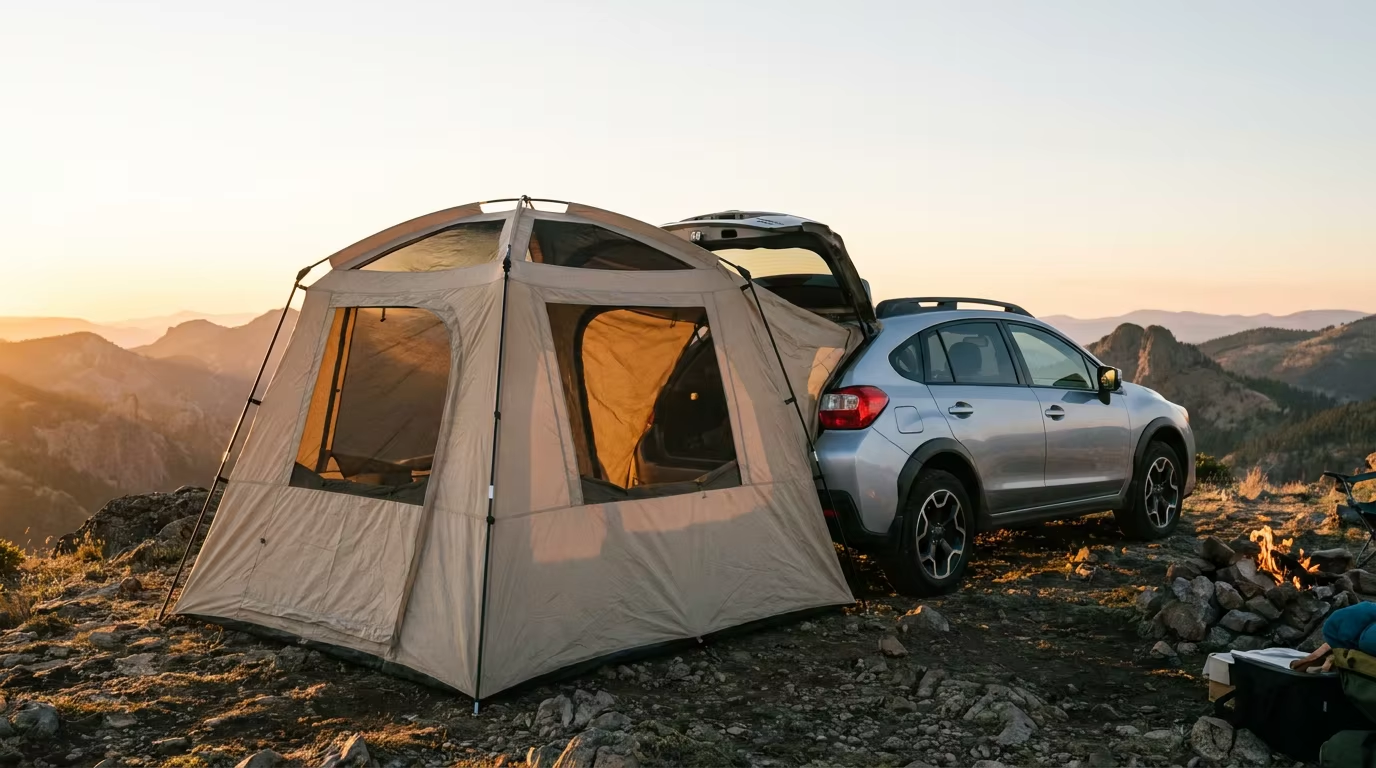
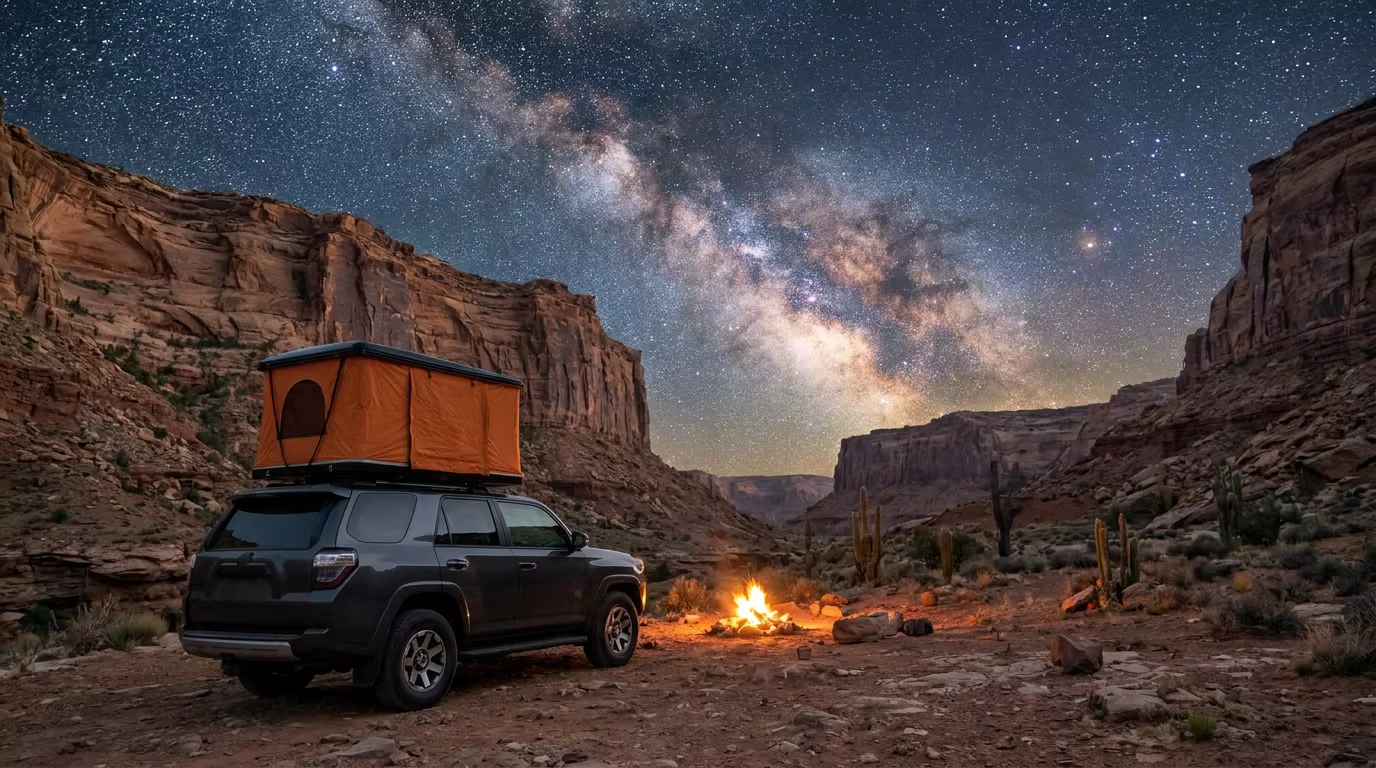
Choosing between a rooftop tent and a ground-based car tent involves trade-offs that directly impact daily usability. Rooftop models excel in aerodynamics and footprint efficiency; they keep the sleeping area elevated, away from mud, uneven rocks, and crawling insects. However, their tapered shape often restricts headroom near the feet, and entry requires climbing a ladder—something that may be tricky during a middle-of-the-night bathroom break. Ground-based car tents, such as awning tents or tailgate attachments, offer effortless walk-in accessibility and almost full standing height throughout, making them excellent choices for extended multi-day base camps. Yet, these models demand a flat, clear patch of ground next to the vehicle and have a taller profile that catches the wind more aggressively. Balancing the ease of entry against the need for a compact, aerodynamic setup is a personal decision heavily influenced by the type of terrain most frequently visited.
Weatherproofing That Withstands Real-World Conditions
Camping gear gets no second chances when a sudden storm rolls in. Checking the hydrostatic head rating is a reliable starting point for waterproofing. Industry standards suggest that a rating above 3,000 millimeters offers substantial protection against heavy rain. Field tests conducted on PU-coated fabrics in 2024 showed that these materials retained 98% of their water resistance even after three continuous days of simulated downpour. Beyond the fabric, the seam construction is equally vital. Welded seams reduce potential leak points by roughly 75% when compared to traditional stitching, according to comparative wind-simulation analyses. For wind stability, hard-shell tents with aerodynamic profiles generally hold their ground up to wind speeds of 30 miles per hour. Soft-shell versions are typically stable up to 20 miles per hour, provided the included guy lines are reinforced and anchored correctly into the soil. Investing in a tent with a properly sealed rainfly that covers the zippers entirely prevents moisture from creeping in through the most vulnerable entry points.
Selecting Materials for Long-Term Durability
The longevity of a car tent hinges directly on its fabric composition. Polyester fabrics with a 300D or higher weave, combined with a polyurethane coating, deliver a great balance between affordability, water resistance, and a lifespan of around five to eight years of regular use. For those who prioritize weight savings, ripstop nylon offers excellent tensile strength and dries exceptionally fast after a rainy morning, though it requires regular UV treatments to prevent degradation. Poly-cotton canvas takes the crown for long-term resilience in harsh environments. This blend breathes exceptionally well, reducing internal condensation, and naturally repels light rain. A well-maintained canvas tent can easily survive ten to fifteen years in the field, making it a favorite among serious off-grid explorers who ignore portability in favor of sheer durability. Tents constructed from this heavy-duty canvas are noticeably heavier and slower to dry, but the payout in windproofing and UV stability is unmatched.
Why Consistent Quality and Supply Chain Oversight Define the Best Gear
Ultimately, the safest and most enjoyable car camping experience relies on more than just a flashy brand name. It rests on the integrity of the manufacturing process. When a production facility strictly adheres to recognized quality management systems—such as ISO 9001—and performs in-house destructive testing on fabric strength and fastener torque, the end-user receives a product that genuinely matches its specifications. Responsible suppliers also maintain transparent supply chains, ensuring that the raw aluminum for the crossbars and the high-tenacity yarn for the canvas meet globally accepted metallurgical and chemical standards. For campers who value high safety margins and long-term performance, turning to a specialized manufacturer with rigorous quality control—and a dedication to overseeing the entire workflow from raw material sourcing to final assembly—guarantees that the car tent performs reliably, mile after mile, and in every weather condition.