 EN

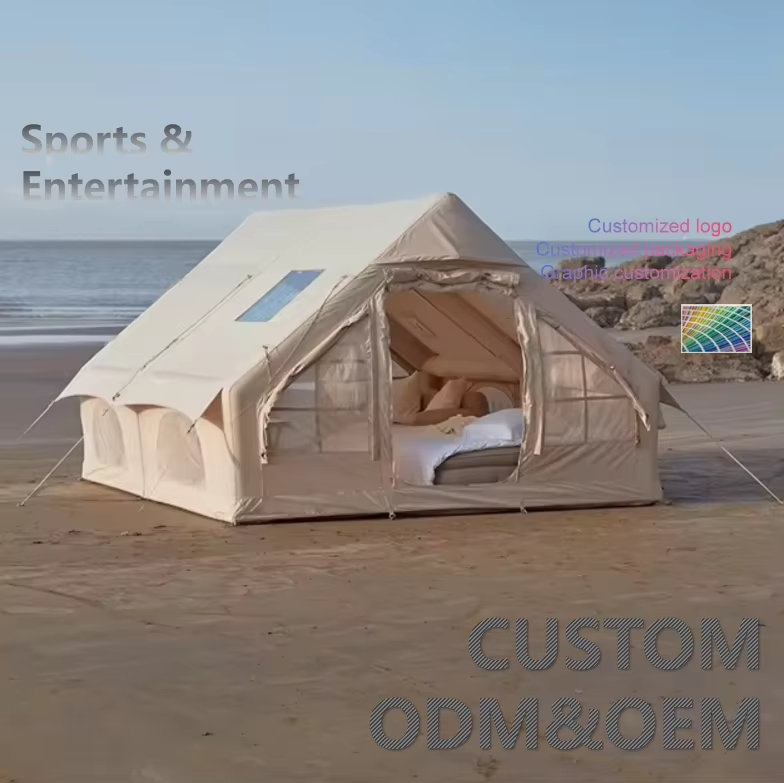
Unmatched Setup Speed: The Core Advantage of Inflatable Tents
For many campers, the first hour on-site sets the tone for the trip. An inflatable tent removes the most tedious part of that hour: assembly. Instead of sorting rigid poles, threading fabric sleeves, and tensioning multiple stake points, you simply unroll the shelter, connect a pump, and watch pre-attached air beams stiffen the structure.
From 30 Minutes to 3 Minutes: Real-World Time Savings
Traditional pole tents often demand 20–30 minutes for full assembly—especially family-sized models with crossing poles, sleeves, and rainfly clips. In contrast, an inflatable tent with a manual or electric pump frequently reaches structural shape in 2–4 minutes, with total setup—including staking and guying—often under 10 minutes in user-reported field tests (2024). The difference is most visible in bad weather: a sudden rainstorm can soak gear and campers while a pole tent remains half-pitched. An inflatable tent can be standing before the first heavy drops arrive, keeping sleeping bags and clothing dry. This speed also reduces physical strain—no lifting heavy pole bundles, kneeling for extended periods, or forcing fiberglass through narrow sleeves. Families with children, older adults, and first-time campers benefit from the absence of complex pole maps. For weekend trips—where daylight after a Friday evening drive is limited—faster setup shifts camping from a chore-driven arrival into an immediate outdoor experience. It also enables groups to pitch multiple shelters quickly in shared sites.
How Air-Beam Engineering Enables Instant Structural Integrity
An inflatable tent replaces separate metal or fiberglass poles with integrated air beams—high-strength tubes sewn or RF-welded directly into the shelter shell. When inflated to a recommended pressure of 5–8 PSI (manufacturer specifications, 2024), these beams form rigid arches that provide continuous structural support. Because they’re pre-attached, there are no loose parts to orient, insert, or accidentally snap. Inflated arches create uniform tension across the fabric, distributing wind and rain loads along the curve rather than concentrating stress at hub connections or pole ends. Many designs use multiple independent air chambers, so a puncture in one section does not collapse the entire tent. Valves allow controlled deflation for compact packing, and the folded shelter rolls tightly. This engineering eliminates common assembly errors—like mismatched pole lengths, broken connectors, or forgotten sleeves—and delivers consistent performance on soft sand, compact dirt, or uneven ground—as long as the tent is properly staked and guyed. For late arrivals or low-light conditions, the air-beam frame provides reliable shelter with less effort and fewer steps.
Durability Redefined: Why Modern Inflatable Tents Withstand Harsh Conditions
Modern inflatable tent designs have shed the flimsy reputation of early air-pole prototypes. Advances in materials and seam construction now deliver weather resistance that rivals or exceeds traditional pole-based shelters.
TPU-Coated Fabrics, RF-Welded Seams, and Redundant Air Chambers
The structural core relies on air beams made from TPU (thermoplastic polyurethane) or reinforced polyester bladders. TPU-coated fabrics resist abrasion, hydrolysis, and punctures while remaining flexible in cold temperatures. Rather than stitched seams—which risk leakage under pressure—manufacturers use radio-frequency (RF) welding to bond air bladders into seamless, airtight envelopes. Redundant air chambers add a fail-safe: if one beam is punctured, the rest remain inflated, maintaining stability and allowing field repair without evacuating the shelter. A leading provider can replace a single damaged air tube in minutes, while the rest of the structure continues to support the canopy. This design tolerates rough handling, rocky terrain, and repeated setup cycles far better than thin aluminum poles.
Field-Tested Performance: Wind, Rain, and UV Resistance Data
Real-world testing shows inflatable air beams flex to absorb wind gusts instead of snapping—field reports describe stable performance in sustained 50+ mph winds without frame failure or excessive flapping. Rain protection depends on hydrostatic head ratings; many inflatable tents use fabrics rated above 2,000 mm, keeping interiors dry during prolonged downpours. RF-welded seams reduce leak paths, and UV-resistant coatings slow sun degradation of the outer canopy. Unlike pole tents—where bent or shattered poles can compromise integrity—air beams return to shape after loading, reducing noise and fatigue over time. Independent durability tests from 2023 indicate that well-maintained TPU air beams retain pressure over multi-week trips with less than 5% loss—making them practical for alpine, coastal, and desert environments where weather shifts rapidly.
Smart Space-to-Weight Ratio: Spacious Interiors Without the Bulk
20% More Usable Volume and Up to 30% Lighter Pack Weight vs. Pole Tents
An inflatable tent achieves a smart space-to-weight ratio by replacing rigid pole frames with low-profile air beams. Independent bench tests show up to 20% more usable interior volume and up to 30% lower packed weight compared with equivalent pole-frame models (2024). Air beams hug the tent shell, enabling more vertical walls, greater floor area, and increased headroom—without adding bulk. A four-person model typically weighs about 18 lb (8.2 kg), while a comparable pole tent weighs roughly 26 lb (11.8 kg). Fewer metal hubs, sleeves, and shock-corded poles also reduce failure points and stored mass. Campers gain extra room for cots, gear, or two additional sleeping pads. The packed size shrinks because air beams compress flat and fold tightly. This benefit matters most for bike touring, motorcycle camping, and airline travel—where lighter weight doesn’t force a trade-off in living space. Instead, the structure uses tension and air pressure to hold its shape, delivering generous interior volume without bulky hardware.
Cultural Shifts Driving Adoption: Glamping, Accessibility, and Next-Gen Campers
How Gen Z and Millennial Priorities Accelerate Inflatable Tent Demand
Younger campers are redefining outdoor expectations. According to industry tracking, 61% of new campers in 2024 were Gen Z or millennials—and many prioritize upscale, tech-friendly gear. They want fast setup, lighter packs, and share-worthy interiors that still feel connected to nature. An inflatable tent meets those needs by replacing pole assembly with air-beam inflation, cutting setup to minutes and leaving more time for experience. Sustainability matters too: many younger buyers favor durable materials and reusable designs over disposable gear. This shift pushes manufacturers to refine air-beam reliability, improve UV resistance, and integrate features like USB charging ports and blackout bedrooms—broadening mainstream demand beyond niche car camping.
Glamping Growth as a Catalyst: From Luxury Trend to Mainstream Camping Norm
The global glamping market grew from USD 3.77 billion in 2024 to USD 4.11 billion in 2025, with projections reaching USD 6.66 billion by 2030. That rapid expansion normalizes comfort-first outdoor stays. Glamping operators increasingly choose air-beam structures because they deliver hotel-like space without complex rigging—offering standing-height ceilings, quick site turnover, and reduced damage risk. This visibility introduces casual campers to key benefits: speed, ease of use, and accessibility. As luxury camping becomes a common entry point, air-inflated designs shift from novelty to familiar, trusted equipment—for first-time and returning campers alike.
FAQ
What makes inflatable tents faster to set up than traditional tents?
Inflatable tents use integrated air beams instead of separate poles. Simply unroll the tent, connect a pump, and inflate the air beams, reducing setup time to minutes.
How durable are modern inflatable tents?
Modern inflatable tents use TPU-coated fabrics, RF-welded seams, and redundant air chambers, making them resistant to punctures, wind, rain, and other harsh conditions.
Are inflatable tents lightweight?
Yes, inflatable tents offer up to 30% less packed weight compared with traditional pole-frame tents, thanks to their compact air-beam design.
Can inflatable tents withstand harsh weather conditions?
Yes, inflatable tents are tested to withstand sustained winds of over 50 mph, and their fabric is designed to resist prolonged rain and UV exposure, ensuring durability in various environments.